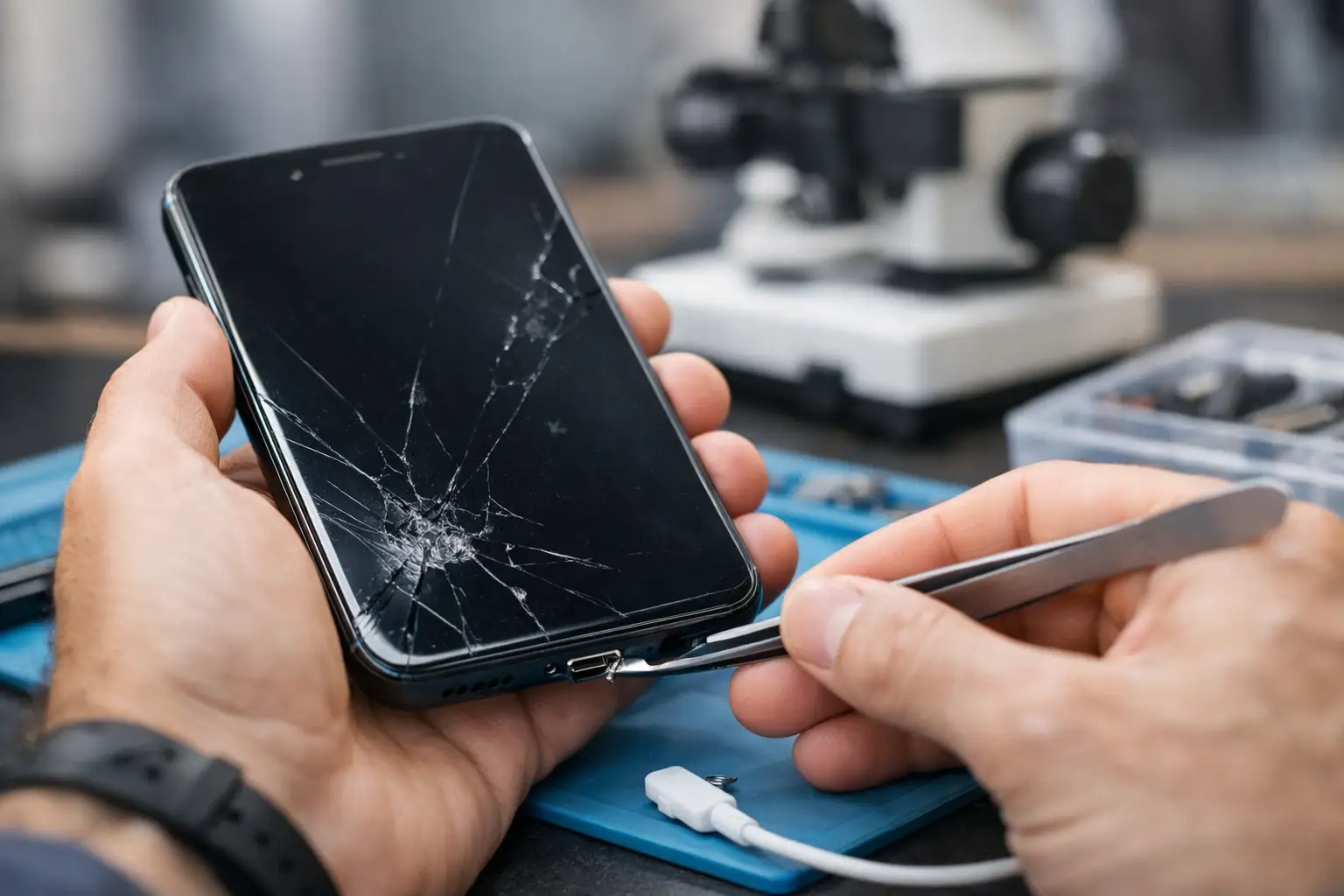
When your battery is at 3% and the cable only works if you hold it at a weird angle, searching for phone charging port repair near me stops being a casual errand. It becomes urgent. A bad charging port can turn a normal day into a mess fast – missed calls, no maps, no payment apps, no access to work or school.
The good news is that a charging problem does not always mean your phone is done. In many cases, the issue is fixable. The bigger question is whether you are dealing with simple debris in the port, cable failure, battery trouble, or actual port damage. Knowing the difference can save you time, money, and a second repair later.
What a charging port problem really looks like
Most people notice the problem in stages. At first, the phone charges slowly. Then the cable starts slipping out. Then charging only works if the phone sits perfectly still. After that, the device may stop charging at all or connect and disconnect over and over.
That does not always mean the port itself is broken. A worn charging cable can cause the same symptoms. So can a weak wall adapter, software glitch, moisture warning, or battery issue. But if multiple cables fail, the connector feels loose, or the port looks bent or dirty, the charging port becomes the likely suspect.
On newer phones, port damage can also affect data transfer, fast charging, Android Auto or CarPlay connections, and even microphone performance on some models. That is why this repair matters more than just getting the battery icon to move.
Before you book phone charging port repair near me
A few quick checks are worth doing before you bring the phone in. Start with the easiest variable – try a different charging cable and a different wall block that you know works on another device. If wireless charging works but wired charging does not, that is another clue pointing toward the port.
Next, inspect the port carefully under good light. Pocket lint is more common than people think. A small amount packed into the bottom of the port can stop the connector from seating fully. People often assume the cable is loose when it is really being blocked.
If your phone recently got wet, do not force a charger into it. Moisture inside the port can trigger warnings and cause corrosion if ignored. In that case, the right move is to let the device dry and get it checked if the warning stays active.
Also pay attention to heat. If the phone gets hot while charging, charges slowly, or loses battery even while plugged in, the problem may involve both the port and the battery. That matters because a good repair shop should diagnose the whole issue, not just swap one part and send you out the door.
When cleaning helps and when it does not
Sometimes a charging port only needs professional cleaning. That is the best-case scenario. Dust, lint, and compacted debris can stop the charger from clicking in, and a careful cleaning can restore normal charging.
But cleaning is not the answer if the internal pins are bent, the port is cracked, or the solder points have come loose from the board. Those problems need repair or replacement. Trying to fix them at home with a pin, paper clip, or random tool often makes things worse. The port is small, fragile, and tied to other important components.
This is one of those situations where DIY can cost more than a proper repair. If you damage the pins or short the connection, what started as a basic port issue can turn into board-level work.
What causes charging ports to fail
Wear and tear is the biggest reason. Most people charge their phone every day, often more than once. Over time, repeated plugging and unplugging wears down the connector. If you use the phone while it is charging, that stress increases. Cords get yanked, bent, twisted, and bumped while connected.
Dust and pocket lint are another major cause, especially if your phone rides in jeans, purses, backpacks, or work bags. Moisture exposure can lead to corrosion, even if the phone was never fully submerged. Cheap cables can also contribute by fitting poorly or damaging the connector over time.
Then there is accidental impact. Dropping a phone while the charger is plugged in can put direct pressure on the port. One bad fall is enough to bend the connector or loosen the charging assembly.
How local repair shops usually handle it
If you visit a repair shop for a charging issue, the first step should be diagnosis. That matters because charging failure is not always one problem. A technician may test the cable, charging block, port connection, battery behavior, and power intake before recommending a repair.
If the port is blocked, a cleaning may solve it. If the part is damaged, the shop may replace the charging port assembly. On some phones, that repair is relatively direct. On others, the charging port is integrated into a more complex component, which can affect labor time and cost.
This is also where model differences matter. A repair on one Android phone may be quicker than on another. Some iPhones and Samsung devices require more disassembly than older models. Tablets and other devices can be even more variable. That is why quote-based repair makes sense – the exact fix depends on the device and the condition it is in.
How much charging port repair usually costs
There is no one-size-fits-all price, and anyone giving a flat number without seeing the device is guessing. Cost depends on the phone model, whether the port needs cleaning or full replacement, part availability, and whether there is related damage.
A simple cleaning is obviously less expensive than replacing the charging port. If battery damage, liquid corrosion, or board issues are involved, the price can go up. That does not mean repair is not worth it. In many cases, fixing the port is much cheaper than replacing the phone, setting up a new device, and potentially losing data or app access.
The practical way to look at it is this: if the phone still meets your needs and the repair restores reliable charging, the value is usually there. If the device has multiple failing parts and is already near the end of its life, replacement may make more sense. A good local shop will tell you that honestly.
Why local help beats waiting on mail-in service
When your phone will not charge, time matters. Mail-in repair can make sense for some situations, but it is a bad fit for a device you rely on every hour. You pack it up, ship it out, wait for intake, wait for diagnosis, approve the cost, and then wait again.
A nearby shop is simpler. You can talk to a real person, explain what the phone is doing, and usually get a faster answer about whether the issue is the port, the battery, or something else. For many customers, that speed is the whole point of searching nearby in the first place.
If you are in Richmond and need direct support instead of a shipping label, that local convenience matters. Excell Wireless VA is built around that kind of repair experience – straightforward help, clear next steps, and real troubleshooting for real device problems.
What to look for in a repair shop
The best repair option is not always the cheapest quote. You want a shop that can diagnose the issue first, explain the repair in plain language, and tell you if the problem goes beyond the charging port. That matters because replacing the wrong part wastes both time and money.
It also helps to choose a shop that handles multiple brands and device types. Charging issues are common across iPhones, Samsung phones, Google Pixel devices, Motorola phones, tablets, and other electronics, but each one can fail a little differently. A broad repair background usually means better troubleshooting.
Clear communication matters too. If a shop cannot tell you what they are checking, what the likely issue is, or how long the repair may take, keep looking.
Don’t wait until the phone is completely dead
A failing charging port usually gives warnings before it quits. Slow charging, cable wiggle, intermittent connection, and random disconnects are all signs that something is off. Waiting too long can turn a manageable repair into a bigger headache, especially if the phone dies before you back anything up or transfer what you need.
If your device only charges at a certain angle, stops charging in the car, or refuses to recognize cables that used to work, get it checked sooner rather than later. Sometimes the fix is quick. Sometimes it takes more work. Either way, you are better off finding out before the battery hits zero for the last time.
If you are searching for phone charging port repair near me, you probably do not need a long runaround. You need a real diagnosis and a clear path to getting your phone working again. Start there, and you will know whether the answer is a simple cleaning, a part replacement, or a smarter next step.