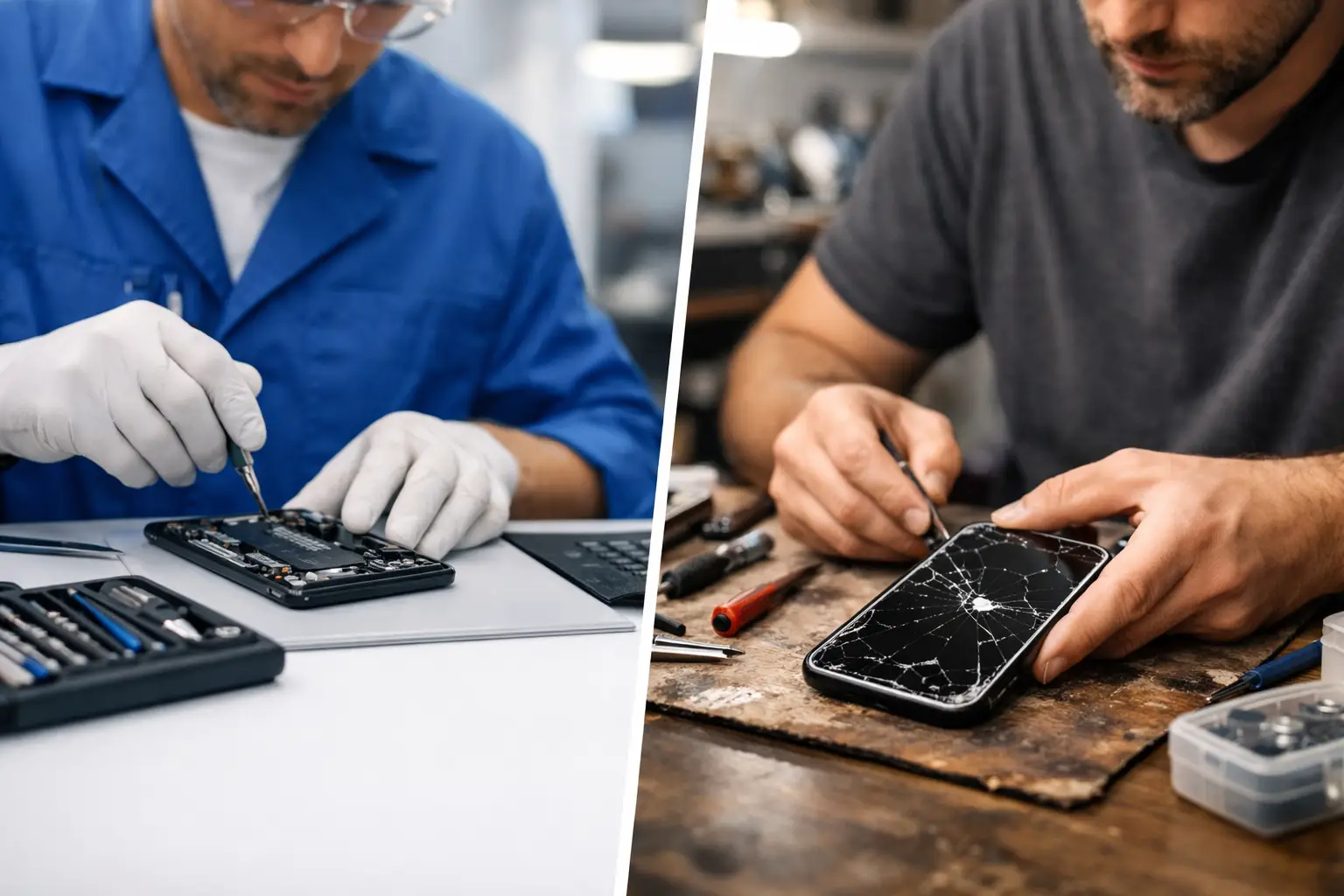
A cracked phone screen can turn into a bigger decision than expected. Authorized versus independent repair affects more than where you take your device. It can affect the price, turnaround time, available parts, warranty options, and whether you can get help for an older or less common device.
For most people, the right choice comes down to the problem in front of them. A phone still covered by a manufacturer warranty has different needs than a two-year-old device with a broken charging port. Here is how to compare your options without getting stuck in a long support process when you need your device back.
What authorized repair means
An authorized repair provider is approved by a device manufacturer to perform certain repairs. Depending on the brand and program, the provider may use manufacturer-supplied parts, follow brand-specific repair procedures, and have access to diagnostic software or calibration tools.
This can be a good fit when your device has an active manufacturer warranty, a protection plan, or a repair issue that the manufacturer has agreed to cover. An authorized provider may also be required for certain warranty claims. If the repair is covered, you may pay little or nothing beyond a deductible, depending on your plan.
There can be limits, though. Authorized locations generally work within the manufacturer’s policies. They may only service supported models, offer a set list of repair types, require an appointment, or send the device away for service. In some cases, a manufacturer process results in a replacement device instead of a repair to the exact phone you brought in.
That is not automatically a bad thing. It just means you should ask what will happen before you hand over your device, especially if you have data, photos, authentication apps, or business files stored on it.
What independent repair means
An independent repair shop is not affiliated with a device manufacturer. It can diagnose and repair a wide range of phones, tablets, laptops, game consoles, and other personal electronics, often across multiple brands.
The main advantage is flexibility. An independent technician can look at the actual issue and discuss practical repair options. If your phone will not charge, for example, the cause could be debris in the port, a worn charging port, a battery problem, a damaged cable, or a board-level issue. A local shop can help narrow that down instead of treating every problem as a replacement case.
Independent repair is often a strong option for devices that are out of warranty, have accidental damage, are older, or do not qualify for manufacturer service. It can also be more convenient when you need a local answer quickly rather than mailing your device away or waiting for a manufacturer appointment.
Part availability varies by model and repair type. A dependable independent shop should explain the part options available, the expected repair outcome, price, and any shop warranty before work begins. There is no one-size-fits-all answer, and clear information matters more than a vague promise.
Authorized versus independent repair: the differences that matter
The best comparison is not simply official versus unofficial. It is about what you need from the repair.
Warranty and protection plans
Start here if your device is newer. Check whether it is still under the manufacturer’s limited warranty or covered by a protection plan. A warranty may cover a defect, but it usually does not cover accidental screen damage, liquid damage, loss, or normal wear unless you have additional coverage.
Before choosing any repair, read the terms of your plan or contact the manufacturer. Ask whether outside repair affects existing coverage and whether your specific issue is eligible for authorized service. Rules can differ by brand, model, region, and type of damage.
If there is no active coverage, an independent repair quote may make more financial sense. You are no longer comparing a covered claim to a paid repair. You are comparing the actual cost, timing, and value of getting your device working again.
Cost and repair value
Authorized pricing can be predictable, particularly for common repairs on current devices. But predictable does not always mean lower. Manufacturer service may charge a flat rate, require a deductible, or recommend replacement when repair is not offered through its program.
Independent shops can often provide a quote based on the problem and model. This is especially useful when you are deciding whether a repair is worth it. Replacing a charging port, battery, or screen may be far less expensive than buying a new phone. On the other hand, extensive liquid damage or serious motherboard damage may not be the best use of your money on an older device.
Ask for the complete estimate. Find out whether diagnostic fees apply, whether the estimate changes if more damage is found, and whether the repair has a warranty. A low starting price means little if it does not include the work your device actually needs.
Speed and convenience
People rarely plan for a broken phone. You need your maps, banking apps, work messages, school accounts, and family contacts now.
An authorized route may involve scheduling, shipping, waiting for an assessment, or following a claim process. That can be reasonable for a covered repair or a complex issue tied to the manufacturer. Still, it may not be the fastest route for every problem.
A local independent shop can be more direct. You can describe the issue, get a quote, bring the device in, and speak with someone who can assess it. At Excell Wireless VA, the goal is straightforward: bring in the device and explain the problem, whether it is a cracked screen, power issue, charging failure, speaker trouble, or something less obvious.
Turnaround depends on the model, part availability, and damage. Be cautious of anyone who guarantees a repair time before inspecting the device. Fast service is useful, but an accurate diagnosis is what keeps a small problem from becoming a repeat repair.
Parts, tools, and repair quality
Parts are a reasonable question, not an awkward one. Screens, batteries, cameras, charging ports, and other components can vary in source and quality. Some repairs require calibration or software checks after installation. Some models have components that are harder to source than others.
Authorized providers may use manufacturer parts under the terms of their program. Independent shops may offer different parts options based on availability, device age, performance needs, and budget. Ask what part will be used and what to expect after the repair. For a screen, ask about display quality and touch response. For a battery, ask about expected performance. For a charging issue, ask whether the port was tested with multiple cables and power sources.
Quality also includes the diagnosis. Replacing a battery will not fix a device that is failing because of liquid corrosion or a damaged charging circuit. A good technician explains the likely cause, the repair path, and the uncertainty when there is one.
Questions to ask before you choose
You do not need to become a repair expert before getting help. A few direct questions can prevent surprises:
- Is my device still covered by a manufacturer warranty or protection plan?
- Is the issue likely covered, or is it accidental damage?
- What is the full repair estimate, including diagnosis and parts?
- What type of part will be used, and what warranty comes with the repair?
- How long is the expected turnaround after the device is inspected?
- Will the repair affect my data, settings, water resistance, or existing coverage?
Back up your device if you can before any repair. If the screen still works, save photos and important files, make sure you know your passcode, and remove account locks only when the repair provider explains why it is needed. Never share your passwords. A reputable shop should not need them for a standard hardware repair.
Choose based on the device and the problem
Use authorized service when an active warranty or protection plan gives you a clear advantage, or when the manufacturer requires its repair channel for your specific claim. It may also be the right move for certain highly specialized repairs on newer models.
Choose an independent repair shop when your device is out of warranty, you need fast local support, you want options across brands, or you need a practical assessment before spending money. This route can be especially helpful for common issues such as screens, batteries, charging problems, buttons, cameras, speakers, and troubleshooting that does not fit neatly into a manufacturer claim.
The best next step is simple: describe what your device is doing, share the model if you know it, and ask for a clear quote. A useful repair decision starts with an honest diagnosis, not pressure to repair or replace before you understand the problem.