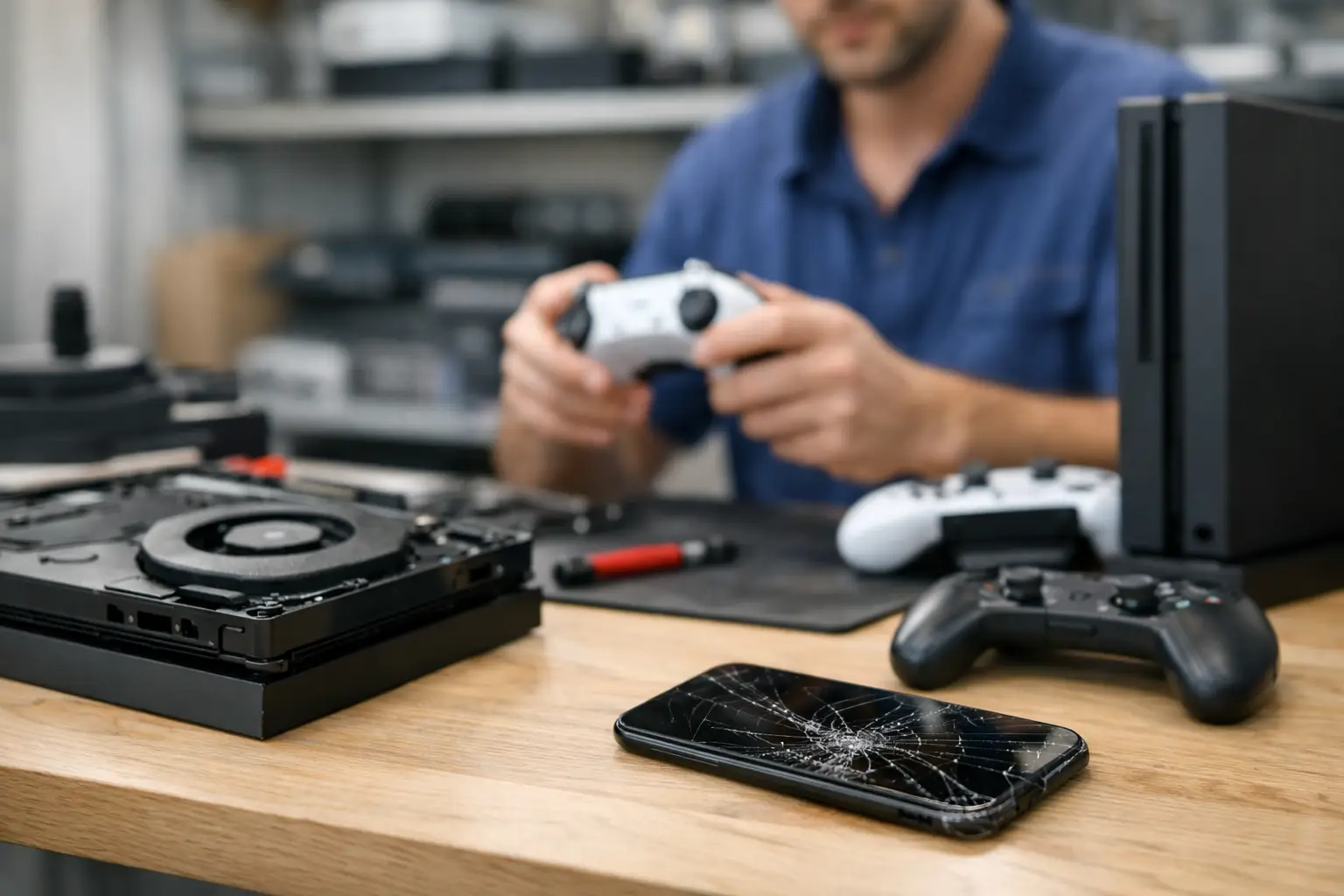
Your console stops turning on the night before the weekend, or it starts overheating halfway through a match, and suddenly a simple repair feels urgent. That is usually when people start searching for a game console repair shop and realize not every repair option is worth their time.
Some shops move fast, communicate clearly, and tell you exactly what they can do. Others keep your device for days with no update, guess at the problem, or push a replacement before checking whether a repair makes sense. If you want the job done right, it helps to know what to look for before you hand over your system.
What a good game console repair shop should actually do
A good repair shop should make the next step simple. You explain the issue, they ask a few practical questions, and they tell you whether the problem sounds repairable, what the process looks like, and how to bring the console in.
That sounds basic, but it matters. Many console problems are not obvious from the outside. A system that will not power on could have a bad power supply, HDMI issue, board damage, overheating problem, or damage from a drop or liquid exposure. A shop that treats every problem like a quick guess is already giving you a warning sign.
A reliable shop should be comfortable troubleshooting common issues across major systems. That includes no power, no display, overheating, loud fan noise, charging issues on handhelds, disc read errors, controller connection problems, and damaged HDMI ports. They should also be honest when a repair may not be cost-effective.
Signs you found the right repair shop
The best shops are usually not the ones making the biggest promises. They are the ones asking the right questions and setting clear expectations.
If a technician wants to know the console model, what happened before the issue started, whether it has been dropped, whether it still shows lights or makes sound, that is a good sign. Those details help narrow down the problem before the device is even opened.
Clear communication matters just as much as technical skill. You should know whether the shop offers diagnosis, how pricing is handled, whether parts availability could affect timing, and when you can expect an update. If you have to chase basic information before the repair even starts, that usually does not improve later.
A strong local shop also understands urgency. People do not bring in consoles for fun. They bring them in because something stopped working and they want a real answer. Fast intake, practical advice, and direct communication go a long way.
Questions to ask before you hand over your console
You do not need a long checklist, but a few smart questions can save you time.
Ask what kinds of console issues they repair most often. Ask whether they have experience with your specific model. Ask how they handle diagnosis and whether they contact you with a quote before moving forward. If the issue is something common like an HDMI port failure or overheating, ask whether that is a repair they see regularly.
It also helps to ask about turnaround time, but keep your expectations realistic. Some repairs are straightforward. Others depend on board-level damage, parts availability, or whether the original issue caused additional failures. A good shop will give you a practical range, not an empty promise.
If you have already tried another fix, say so. If the console was opened before, mention that too. Previous repair attempts can change what the technician finds inside and affect both time and cost.
Common console problems a repair shop sees
A lot of console issues fall into a few categories, even if the symptoms look different at first.
Power problems are one of the most common. The console may be completely dead, turn on briefly and shut back off, or show lights without fully booting. Sometimes the cause is simple. Sometimes it points to a deeper internal fault.
Display issues are another frequent repair. You may hear sound but get no picture, or the system may work only when the cable is held in a certain position. In many cases, the HDMI port takes the damage, especially if the console has been plugged and unplugged often or moved around while connected.
Overheating can show up as loud fans, random shutdowns, lag, or heat pouring from the case after a short session. Dust buildup, failing fans, dried thermal compound, or internal damage can all play a role. The right repair depends on the actual cause, not just the symptom.
Disc reading failures, software crashes, storage issues, and charging problems on handheld systems also show up often. These are the kinds of repairs where a proper diagnosis matters most. Swapping random parts rarely solves them.
Why local repair often makes more sense
When a console breaks, people usually consider three options. They ignore it, replace it, or get it repaired. Repair often wins when the problem is limited, the system still has value, and you want a faster answer than a manufacturer process or online mail-in service can offer.
A local repair shop gives you something people still value when a device goes down – direct contact. You can call, explain the issue, ask questions, and bring the console to a real location. That is a lot more practical than packing it up, shipping it out, and waiting through a generic support process.
For customers in Richmond, that local advantage matters even more when the repair feels urgent. A nearby shop can often give you quicker guidance, quicker intake, and a clearer idea of whether the system is worth fixing. Excell Wireless VA is built around that kind of straightforward help. Any device. Any issue. Tell the shop what is happening, get a quote, and take the next step.
When repair is worth it and when it might not be
Not every console should be repaired. That is the honest answer.
If the system has a minor port issue, cooling problem, power fault, or replaceable internal component failure, repair is often the better value. If the console is relatively current, holds saved data you want to keep, or would cost a lot more to replace, repair usually makes even more sense.
But it depends on the extent of the damage. Severe liquid damage, heavy board corrosion, or multiple failures at once can push a repair into less practical territory. In those cases, a trustworthy shop should explain the situation plainly instead of trying to force a sale.
That honesty is part of what separates a solid repair provider from a risky one. You want real troubleshooting, not pressure.
How to help the repair go smoothly
Before you bring in your console, gather the basics. Know the exact model if you can. Be ready to describe what the system does, what changed, and whether anything happened right before the issue started. If there was a storm, a drop, a spill, or a failed update, mention it.
Bring the power cable or accessories if the shop asks for them. Some issues are easier to verify with the original setup. If your console still powers on, back up data when possible before service. That is not always an option, but if it is, do it.
Most importantly, do not keep trying random fixes from five different videos once the problem becomes serious. Repeated failed attempts can make diagnosis harder and turn a manageable repair into a larger one.
Choosing a game console repair shop with confidence
A good game console repair shop is not just fixing hardware. It is saving you time, reducing guesswork, and giving you a clear path forward when your system stops working.
Look for direct communication, practical troubleshooting, experience with common console failures, and a simple process for getting a quote or bringing the device in. If a shop can explain the next step clearly and treat the problem like something they handle every day, you are probably in the right place.
When your console goes down, you do not need a speech. You need answers, a realistic quote, and a repair shop that knows what to do next.