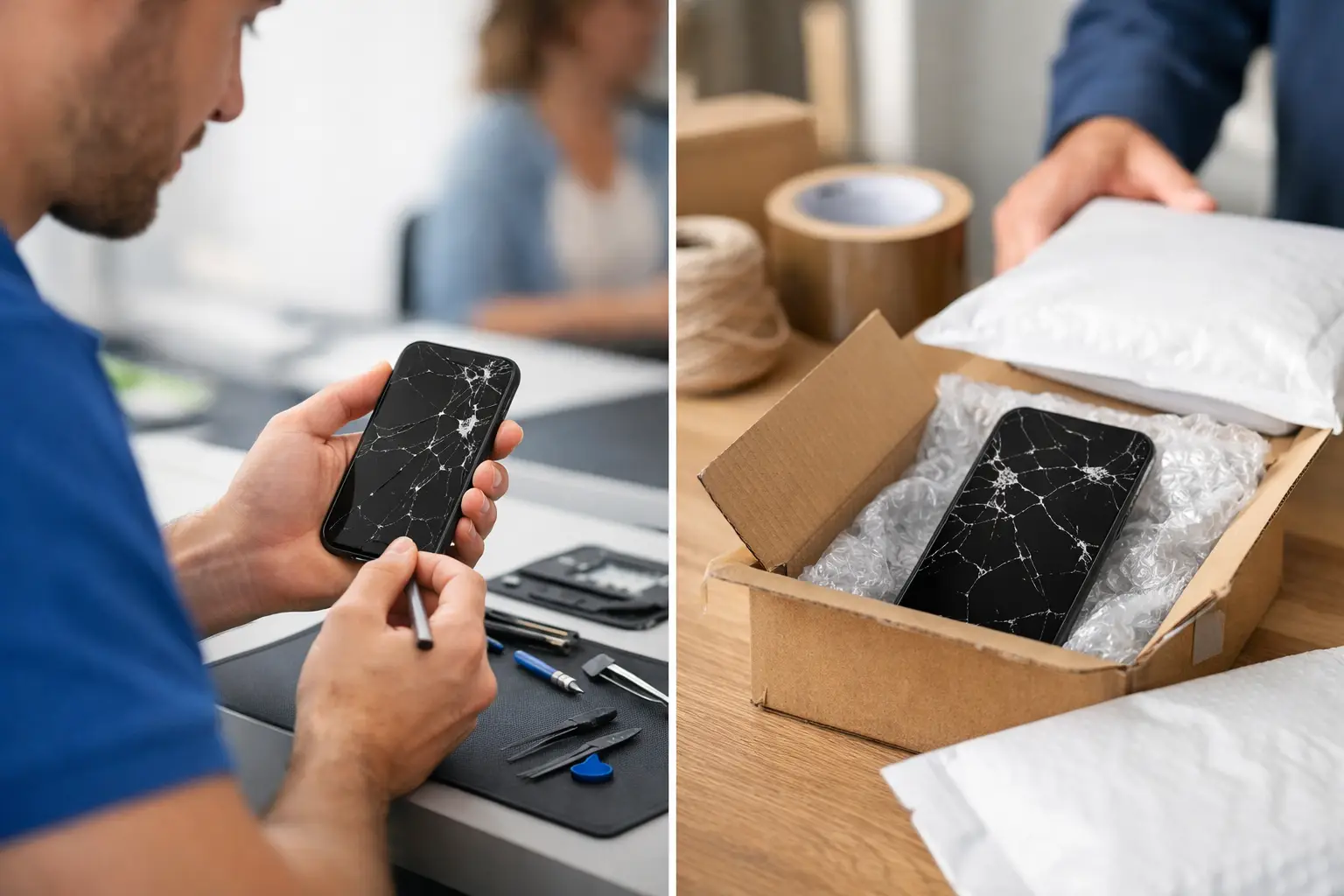
A cracked screen is annoying. A phone that will not charge, power on, or hold a signal can stop your whole day. When that happens, the choice between walk in repair versus mail in is not just about where the device gets fixed. It affects how long you are without it, who you can talk to, and how much control you have over the process.
For many Richmond customers, a local repair shop makes more sense because the problem is urgent. You can bring in the device, explain what happened, get it looked at, and make a decision without boxing it up and waiting for shipping updates. Still, mail-in service can be useful in a few situations. The right answer depends on the device, the issue, the repair provider, and how quickly you need it back.
Walk In Repair Versus Mail In: The Real Difference
Walk-in repair means you take your device to a physical repair location. You speak with a technician or service representative, describe the issue, and leave the device for diagnosis or repair. Depending on the problem, the repair may be completed the same day or require more time for testing, parts, or deeper troubleshooting.
Mail-in repair means you ship the device to a repair center. The provider receives it, checks the issue, performs the repair, and ships it back. This can work well when there is no nearby service option, but it adds transit time at both ends. You also need to package the device safely, track the shipment, and wait for updates from a team you may never meet.
The difference is simple: walk-in repair puts you closer to the repair process. Mail-in repair puts distance between you and the device until the job is done.
Speed: When Being Local Matters Most
If your phone is your alarm clock, wallet, work contact, school tool, map, and family connection, every day without it matters. Shipping can turn a straightforward repair into a longer interruption. Even before a technician sees the device, you may spend time requesting a shipping label, packing the item, dropping it off, and waiting for delivery.
With walk-in service, the intake starts when you arrive. You can show the exact problem instead of trying to explain it in a form. That matters with issues that happen only sometimes, such as random restarts, weak charging, microphone problems, overheating, or a screen that works at certain angles.
A local shop also gives you a clearer answer when the repair is not as simple as it first looked. A cracked screen may be limited to the display. Or the impact may have affected the frame, cameras, battery connection, or touch function. Seeing the device in person makes it easier to discuss your options before moving forward.
Mail-in service may be reasonable if the repair is highly specialized or if you live far from a qualified shop. But for common phone, tablet, charging, battery, and screen issues, the shipping time is often the biggest drawback.
Cost Is More Than the Repair Price
A mail-in repair quote can look convenient at first. Before choosing it, look at the full cost. Shipping may be included, discounted, or charged separately. You may also need insurance for a valuable phone, tablet, laptop, or game console. If the device has a problem after it comes back, sending it out again can create another delay and another shipping question.
Walk-in repair can make the cost conversation more direct. You can bring in the device, ask what the quote includes, and decide whether repair makes sense compared with replacement. For an older device, the best choice may depend on the condition of the battery, charging port, cameras, frame, and storage – not just the one issue that brought you in.
The cheapest advertised price is not always the best value. A low quote does not help much if it leaves out parts, labor, shipping, diagnostic work, or the possibility that a second issue will be found. Ask for clear information before approving a repair, whichever option you choose.
Communication Is Easier Face to Face
Most people do not know the technical name for what is wrong with their device. That is normal. You may only know that the screen flickers, the phone will not connect to Wi-Fi, the battery drops from 40% to zero, or the charging cable has to be held a certain way.
At a walk-in shop, you can demonstrate the problem. You can ask what the technician is checking and what may be causing it. You can also ask practical questions: Will my data be affected? Should I back up the device first? Is a repair worth it? What happens if the issue turns out to be different from the original diagnosis?
Mail-in service relies more heavily on written descriptions, automated status messages, and phone or email support. That can be fine for a clearly defined issue. It can be frustrating when the problem is intermittent or when you need an answer quickly.
For customers who want straightforward help, a face-to-face conversation removes a lot of guesswork. Excell Wireless VA works with customers who need that kind of direct troubleshooting across a wide range of personal electronics.
Device Safety and Data Privacy
Both repair methods require trust. With mail-in service, your device is handled by a carrier, received by a facility, repaired, packed again, and returned through the shipping system. Good packaging and tracking lower the risk, but they do not remove it completely.
A walk-in repair avoids the shipping portion of that process. You hand the device to a local team and pick it up from the same place. That can feel more comfortable, especially when the device contains work messages, family photos, banking apps, or private documents.
Before any repair, back up your device if you can. Remove your SIM card if the provider asks you to, and know your screen lock information. Some repairs require testing basic functions after service. You should never share passwords for email, banking, social media, or other personal accounts.
If the phone will not turn on or the screen is unusable, tell the repair shop. They can explain what testing may be possible and what information, if any, is needed to complete the job.
When Mail-In Repair Can Be the Better Choice
Mail-in is not automatically a bad option. It may be the better fit when you have a rare device, need a manufacturer-specific service path, or live far from a repair provider that can handle the issue. It can also work if you have a backup phone and are not under pressure to get the device back quickly.
Some customers choose mail-in repair because they are dealing with warranty coverage or a manufacturer program. Read the terms carefully. Independent repair and manufacturer service may use different parts, procedures, pricing, warranty terms, and data handling practices. Choose the option that matches your priorities, not just the one that sounds most familiar.
How to Choose Without Wasting Time
Start with the urgency of the problem. If you need your phone for work, school, caregiving, travel, or daily communication, walk-in repair is usually the practical first move. Bring the device in, explain the issue, and get a quote based on what is actually happening.
Then consider the repair itself. A broken screen, weak battery, charging problem, damaged camera, software issue, or device that will not power on may be worth diagnosing locally. You get a chance to ask questions before the device disappears into a shipping box.
Finally, think about your backup plan. If you have another device and the repair is specialized, mail-in may be manageable. If you do not have a backup, the added shipping time can be a major inconvenience.
The best repair choice is the one that gets you a clear answer and a working device without adding unnecessary delay. If your electronics are slowing down your day, bring the problem to someone who can see it, test it, and help you decide what to do next.