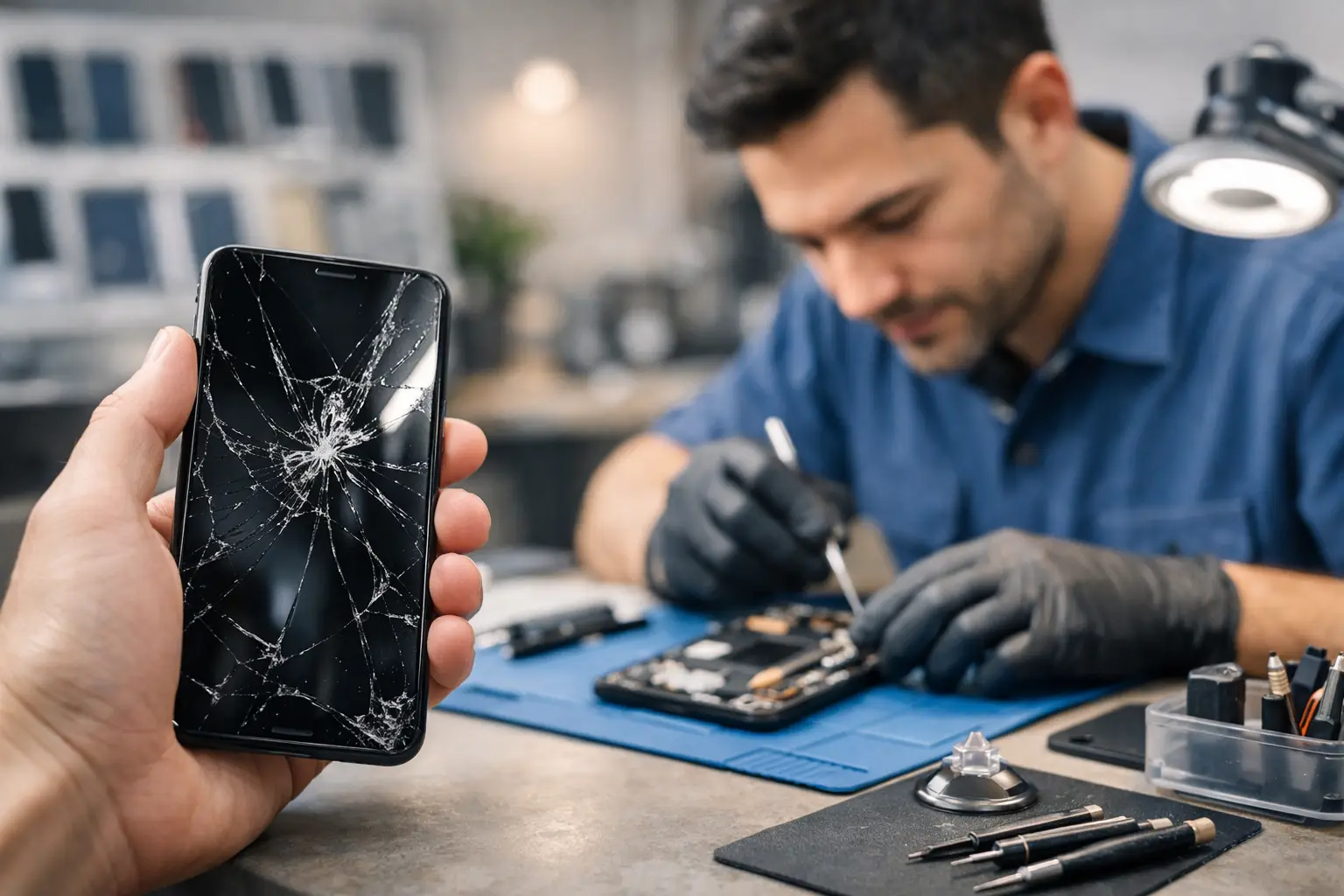
A cracked screen at 8 a.m., a phone that will not charge before work, or a device stuck in a boot loop right when you need directions – that is when finding the right android phone repair shop stops being a casual search and becomes the next thing you need to solve.
Most people are not comparing repair providers for fun. They are trying to get back to work, answer calls, pay bills, check school messages, and keep their day moving. That is why the best repair experience usually comes down to something simple: fast answers, honest guidance, and a clear path to getting the device checked.
What an android phone repair shop should actually help with
A good shop should be able to do more than swap a broken screen. Android phones come from many brands, and the problems are not always obvious from the outside. A phone that looks fine may have charging port damage, battery failure, water exposure, software corruption, speaker issues, camera problems, or a bad power button.
That matters because the symptom is not always the repair. If your phone will not turn on, the battery may be dead, but it could also be the charging port, the board, or damage from a previous drop. If your screen is black, the display may be broken even though the glass is not cracked. A reliable shop starts with troubleshooting instead of guessing.
For most customers, that is the real value. You want someone to look at the phone, explain what is likely happening, and tell you whether the repair makes sense before more time is wasted.
How to tell if an android phone repair shop is worth your time
The first sign is responsiveness. If you call, request a quote, or describe the issue, you should get a direct answer about next steps. Not every problem can be priced perfectly before inspection, and that is normal. But you should be told what information helps, whether the issue sounds common, and whether bringing the phone in is the best move.
The second sign is range. Android is not one phone. It includes Samsung, Google Pixel, Motorola, LG, and other brands, with different parts, designs, and repair approaches. A shop that regularly works across multiple Android models is usually better equipped to handle real-world problems than a provider that only wants the easiest jobs.
The third sign is honesty about trade-offs. Some repairs are straightforward. Others depend on part availability, prior damage, liquid exposure, or whether the phone has deeper internal failure. If a shop promises every repair will be quick and cheap, that is usually a red flag. Good repair work is practical, not magical.
Common repairs and why diagnosis matters
Screen replacement is the one most people think about first, and for good reason. It is common, visible, and urgent. But even a simple screen job can vary depending on the model, frame condition, touch response, and whether the phone also suffered internal impact damage.
Battery problems are another frequent issue. Phones that drain fast, shut off randomly, overheat, or only work while plugged in may need a battery replacement. Then again, those same symptoms can point to charging problems, background software issues, or board-level damage. That is why diagnosis matters before assuming the fix.
Charging issues are often misread. People buy new cords, replace adapters, and try different outlets before realizing the charging port is loose, clogged, or damaged. In some cases, careful cleaning solves the issue. In others, the port or related components need repair.
Software problems can be just as disruptive as hardware damage. Freezing, restart loops, app crashes, failed updates, or locked devices can make a phone feel useless. Sometimes the solution is simple. Sometimes data backup, reset decisions, or account access become part of the repair conversation. A helpful shop explains what can be done and what risks come with each option.
Questions to ask before you hand over your phone
You do not need to know repair terminology to ask smart questions. Start with the basics. Ask what the likely issue is based on the symptoms. Ask whether the phone needs to be inspected before the quote is confirmed. Ask how long the repair may take and whether parts are in stock.
It also helps to ask whether there may be more than one problem. A dropped phone may need a screen, but the impact could also affect the frame, front camera, or charging function. A water-damaged phone may appear to recover, then fail again days later. A good shop will not create unnecessary fear, but it should be clear about uncertainty when uncertainty exists.
If your data matters, say that early. For many customers, the photos, messages, notes, and app access matter more than the device itself. Some repairs do not affect data. Others may involve risk if the phone is unstable. That is an important conversation to have upfront, not after the repair begins.
Cheap repair is not always the low-cost option
Price matters. Everyone understands that. But the cheapest quote is not always the best outcome if the repair fails, the part quality is poor, or the actual issue was never diagnosed correctly.
This is where local independent repair shops often make the most sense. You can speak with a real person, explain what happened, and get a practical answer based on the device in front of them. That is often faster and easier than dealing with a manufacturer process, especially when the phone is older, out of warranty, or needed right away.
It also helps to think beyond the first repair bill. If a rushed low-price fix leads to touch issues, weak charging, or repeat problems, you have not saved money. You have just delayed the real cost.
Why local service still matters
When your phone stops working, convenience becomes part of the repair. A local shop gives you a place to call, visit, and return to if you have questions. That matters more than people realize.
There is also a trust factor in face-to-face service. You can describe what happened, show the symptoms, and get immediate feedback. For urgent device problems, that speed is a big advantage. If you are in Richmond and need practical help without a long process, a neighborhood repair business can often move faster because that is what it is built to do.
That is one reason businesses like Excell Wireless VA appeal to people who want direct answers. The process is simple: explain the issue, get guidance, and bring the device in if needed.
When repair makes sense and when it might not
Not every phone should be repaired. That is the honest answer. If the device is very old, has severe board damage, or would cost nearly as much to fix as it would to replace, then repair may not be the smart move.
But a lot of phones are worth fixing, especially when the issue is isolated and the rest of the device still fits your needs. A cracked screen on a solid phone, a worn battery in a device you otherwise like, or a charging problem that can be repaired without replacing the phone can all be worthwhile fixes.
It depends on the model, the damage, and how you use the device. If your phone is central to work, family communication, banking, school, or business, restoring it quickly may be far more valuable than shopping for a replacement and setting everything up again.
What to do before you visit a repair shop
If the phone still works, back up your data if you can. Remove the case so hidden frame damage is easier to spot. Bring your charger if the problem involves charging, because sometimes the accessory is part of the issue.
Be ready to explain what happened in plain language. Did the phone fall? Get wet? Stop charging slowly over time? Freeze after an update? Those details help speed up diagnosis. You do not need a technical explanation. You just need the sequence of events.
And if the phone is completely dead, do not assume nothing can be done. Dead phones are sometimes suffering from fixable power or charging issues. The fastest way to know is to have the device checked.
A good repair shop should make the next step easy, not complicated. If your Android phone is broken, acting up, or simply not doing what it should, the best move is usually the simplest one: ask for help, get a clear answer, and let the problem be evaluated before it gets worse.