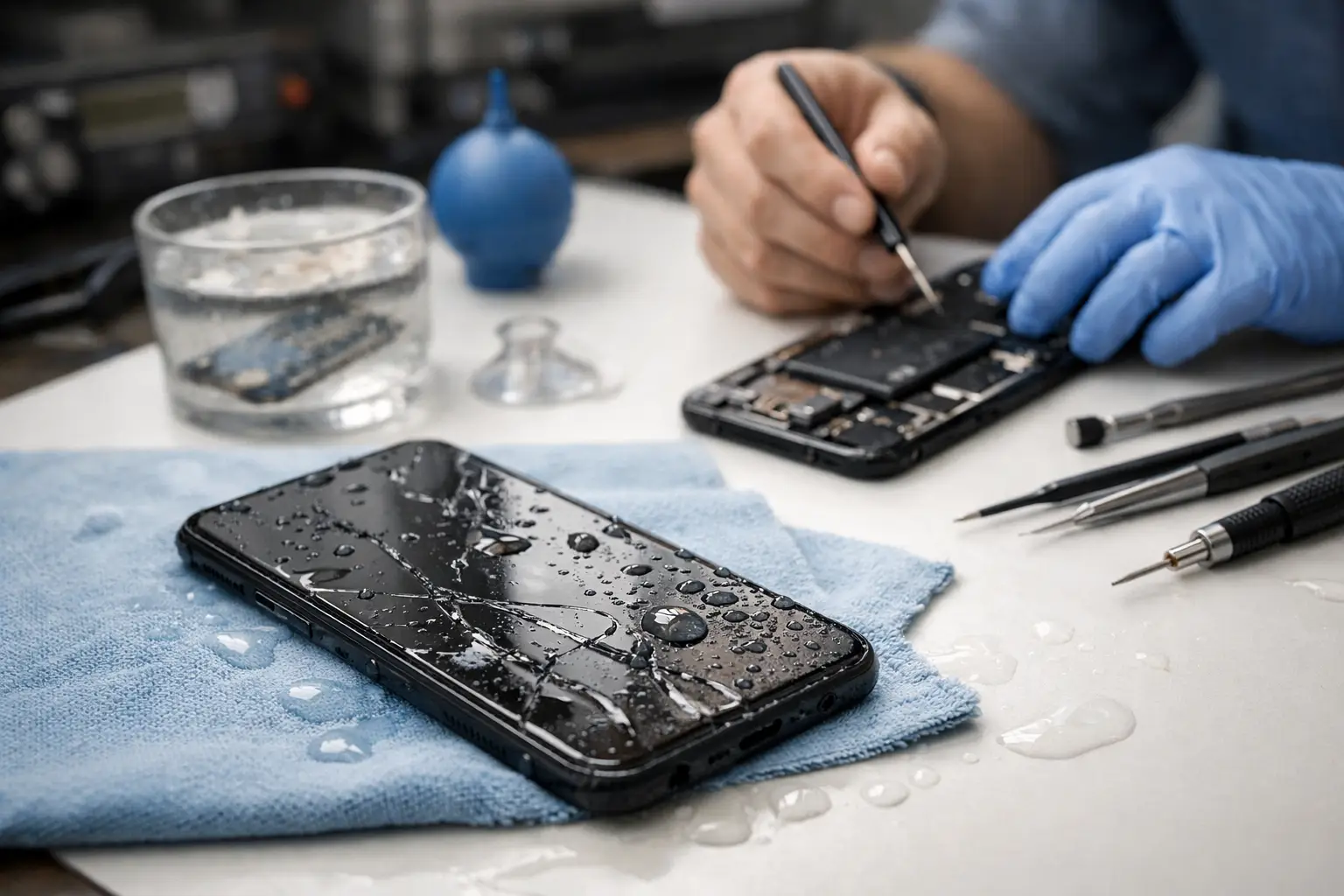
A phone falls in the sink, the toilet, a pool, or just gets soaked in a pocket during a storm – and suddenly every second feels expensive. When you need a water damaged phone repair service, the first few moves matter more than most people think. The wrong step can turn a repairable phone into a dead one.
Water damage is tricky because the problem is not always the water itself. The bigger issue is what happens after the liquid gets inside. Power moving through wet components can short out circuits. Minerals and residue can start corroding contacts, connectors, and tiny board-level parts. A phone may seem fine for a few hours, then stop charging, lose sound, or go completely black later.
What to do before you bring it in
Start by getting the phone out of the liquid right away. If it is still on, power it down as quickly as possible. Do not test buttons over and over to see what still works. Every extra press can push moisture deeper inside or create more electrical activity where it should not be.
If you can safely remove a case, take it off. If the model has a removable SIM tray, taking that out can help air move slightly better through the device. Dry the outside with a clean towel or cloth. Keep it gentle. You are trying to remove surface moisture, not force liquid around the inside.
What you should not do is just as important. Do not charge it. Do not put it on a wireless charger. Do not use a hair dryer with heat. Do not bake it, leave it on a radiator, or assume a bag of rice will solve the problem. Rice is one of those ideas that sounds helpful but usually wastes valuable time. Meanwhile, corrosion keeps working.
If the phone was exposed to something other than clean water, the urgency goes up. Salt water, soda, coffee, juice, and soap water are harder on electronics because they leave more residue behind. In those cases, a proper inspection matters even more.
Why a water damaged phone repair service can help
A real water damaged phone repair service does more than dry off the outside. The goal is to inspect what happened internally, stop ongoing corrosion where possible, and test which parts were affected. Depending on the model and the type of exposure, the issue may be limited to a charging port, battery, screen, earpiece, camera, or other replaceable component. In more serious cases, the main board may need advanced work or the phone may only be recoverable enough to pull data.
This is where timing matters. People often wait a day or two because the phone turns back on, then bring it in after the battery drains fast, the display flickers, or the microphone stops working. By then, the damage has had more time to spread. Quick action does not guarantee a full save, but it usually improves the chances.
A local repair shop also gives you something many people want in this situation – a straight answer. You can bring the phone in, explain what happened, and get guidance based on the model, the liquid exposure, and the current symptoms. That is usually a lot more useful than guessing from internet tips.
Signs your phone has water damage
Sometimes the signs are obvious. The phone will not turn on, the screen is black, or it keeps rebooting. Other times, the damage shows up in smaller ways that are easy to overlook at first.
You may notice the screen has lines, dark spots, or touch problems. Charging may become inconsistent. The speakers can sound muffled or distorted. Cameras may fog up or stop focusing. Face ID, fingerprint sensors, and buttons can act unpredictably. Some phones also show moisture warnings when you try to charge them.
There is also the delayed-failure problem. A device can appear normal for a while, then start failing days later. That is one reason water damage is never something to shrug off just because the phone powered back on.
What a repair shop usually checks
The first step is usually inspection and testing. A technician will look at the phone’s condition, ask what kind of liquid was involved, how long the phone was exposed, and whether it has been charged or powered on since the accident. Those details help set expectations.
From there, the device may be opened so internal components can be checked for visible moisture, residue, or corrosion. The charging port, battery connection, display connectors, cameras, and board areas may all need attention depending on the symptoms. Some phones need cleaning and part replacement. Some need deeper board-level diagnostics. Some are too far gone for full repair but may still allow data recovery.
That last point matters. A lot of customers are not just worried about the phone. They are worried about photos, messages, notes, banking apps, work contacts, and two-factor authentication access. In a water damage case, saving data can be just as important as saving the device itself.
Repair or replace? It depends on the phone
Not every water-damaged phone should be repaired. It depends on the age of the device, the extent of the damage, the repair cost, and whether the phone contains data you cannot easily replace.
If the phone is newer and the damage is limited to a part like the screen, battery, or charging assembly, repair often makes sense. If the motherboard has severe corrosion and several components have failed, replacement may be the better move financially. That is especially true for older models with lower resale value.
This is where practical advice matters more than a sales pitch. A good shop should tell you when repair is worth it and when it is not. Sometimes the smartest move is data recovery first, then replacing the phone. Sometimes a repair buys you enough time to back everything up and make a clean transition to a new device.
How fast should you act?
As fast as you reasonably can. If your phone got wet this morning, today is better than tomorrow. If it happened over the weekend, do not keep charging it and hoping it improves. The sooner the phone is properly assessed, the better the odds of limiting internal damage.
For people in Richmond who need help quickly, a nearby shop matters because there is no waiting around to ship the phone out and hope for updates later. You can explain the issue directly, get a quote, and find out what the next step should be without turning a simple problem into a longer one.
Choosing a water damaged phone repair service
Look for a shop that handles multiple brands and common device issues every day. Water damage does not always fit a simple fix, so experience with different phones and failure patterns matters. You also want clear communication. If a phone may need diagnostic work before final pricing, that should be explained upfront.
It also helps to choose a repair business that keeps the process simple. You should be able to call, describe what happened, and get guidance on whether to bring it in right away. That direct approach is especially useful when you are dealing with an urgent problem and do not want to spend hours sorting through warranty fine print or manufacturer delays.
Excell Wireless VA fits that practical need well. If your phone has taken on water and started acting up, the next move should be simple – call, explain the issue, and get a quote.
The biggest mistake people make
The biggest mistake is waiting because the phone still sort of works. Water damage is rarely stable. A device that powers on now can fail later once corrosion spreads or trapped moisture reaches another component. The second biggest mistake is trying too many home fixes before getting real help.
A wet phone does not need guesswork. It needs a fast, careful response and an honest assessment of whether the device can be saved, repaired, or at least used to recover what matters most.
If your phone has been exposed to water, treat it like a time-sensitive repair, not a problem that will fix itself. A quick decision today can save you money, save your data, and save a lot of frustration by the end of the week.