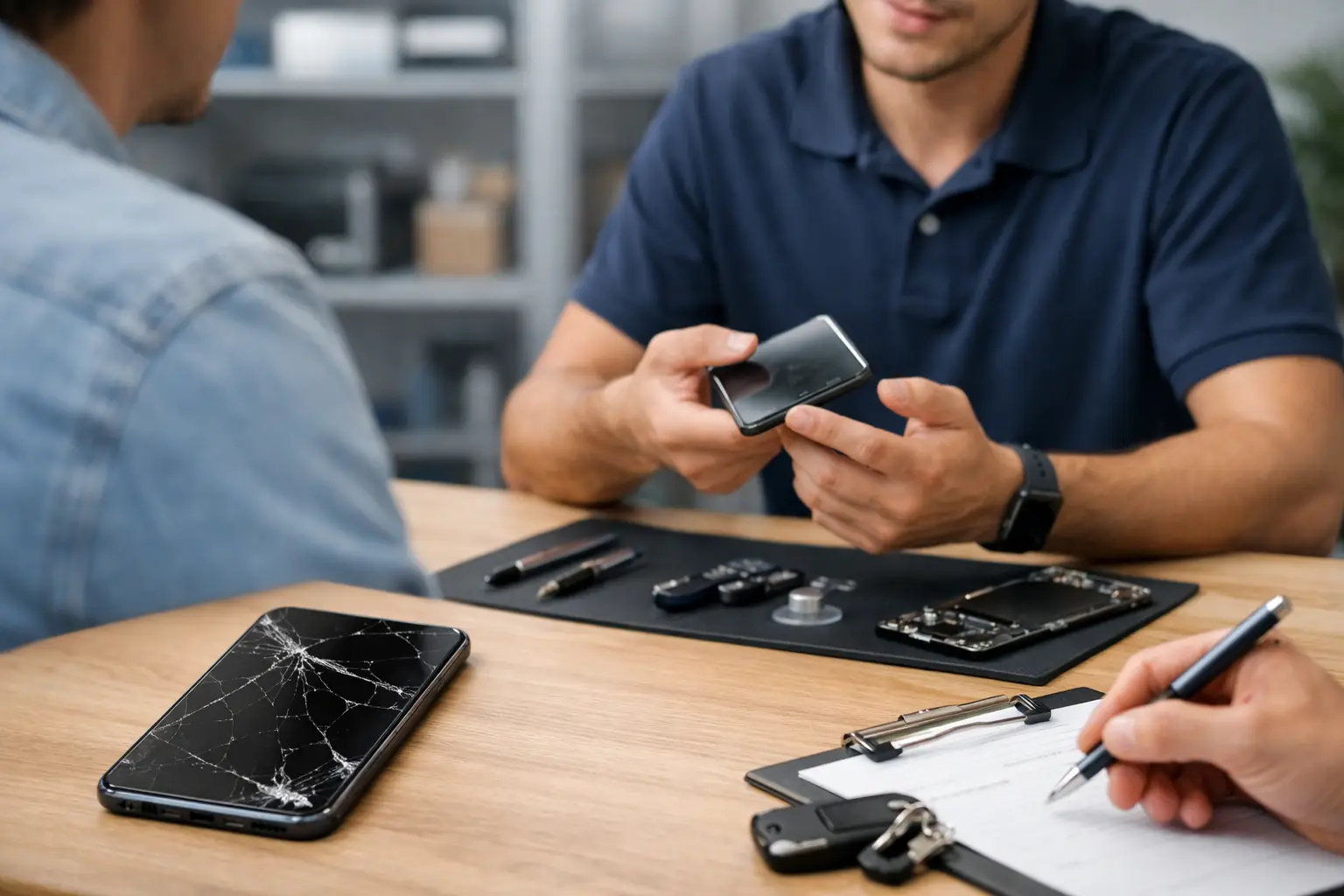
A cracked screen is obvious. A phone that only charges at a certain angle, restarts without warning, or will not connect to a network is harder to price from across the room. That is why local phone repair quotes usually start with a few direct questions about your device and what it is doing. A useful quote gives you a realistic starting point, not a random number that changes the moment you arrive.
If your phone is how you work, pay bills, talk to family, manage school, or run your business, you need clear answers fast. The best way to get them is to give the repair shop enough information to identify the likely issue while leaving room for hands-on testing when needed.
What a Phone Repair Quote Should Tell You
A repair quote should help you decide whether to bring the device in, not leave you guessing about the next step. For straightforward work, such as many screen, battery, charging port, or camera replacements, a shop can often provide a price range or an expected price based on the phone model and the reported problem.
For more complicated issues, a quote may cover the diagnostic process first. That is normal. A phone that will not turn on could have a bad battery, charging port damage, a failed display, liquid damage, or a board-level issue. Those problems can look alike until a technician tests the device.
Ask whether the quoted amount includes parts and labor, whether the part quality has been explained, and whether the price may change after inspection. A direct answer is more valuable than a low number with no details behind it.
Why Local Phone Repair Quotes Can Vary
Two phones with what appears to be the same problem may not need the same repair. The device model matters, but so does the history of the issue. A screen replacement on one model may be routine, while another requires a more expensive display assembly or additional work to restore features correctly.
Parts availability affects the quote too. Common models generally have more replacement options. Older phones, newly released models, foldable devices, and specialty parts can cost more or take longer to source. The choice between aftermarket and premium-quality replacement parts may also affect the price, appearance, brightness, touch response, or long-term durability.
Water exposure is another major factor. A phone may continue working after a spill, then develop charging, microphone, screen, or power problems days later. Cleaning and inspection can reveal corrosion that was not visible when the quote was first requested. In that situation, no honest shop should promise a final repair price before seeing the device.
Software problems deserve the same caution. A frozen phone might need a simple update, a reset, storage cleanup, account recovery help, or deeper troubleshooting. Before authorizing a reset, make sure you understand whether your photos, messages, or app data are backed up.
Details That Help You Get a Better Quote
You do not need technical language to request a quote. Just describe what happened and what the phone does now. The more specific you are, the faster a shop can narrow down the likely repair.
Include the phone brand, exact model, and storage version if you know it. Mention whether it was dropped, exposed to water, repaired before, or started failing after an update. Explain whether the device powers on, vibrates, rings, shows an image, charges, or connects to a computer. Small details can point a technician in the right direction.
Photos are especially helpful for cracked screens, bent frames, damaged charging ports, broken back glass, and camera lens damage. If the problem comes and goes, a short video can help show what happens. For example, a video of the battery percentage dropping from 40% to 2%, or a cable slipping out of a loose port, gives more context than saying the phone is “acting up.”
Do not leave out prior repair history. If a screen, battery, or charging port was replaced elsewhere, that information can affect the diagnosis. It does not mean the device cannot be repaired. It simply helps avoid assumptions.
Price Range vs. Final Price
A price range is often the most practical answer before a device is inspected. It gives you a sense of whether the repair makes financial sense without pretending every issue is identical. For a common repair with clear symptoms, the range may be tight. For intermittent problems, liquid damage, or no-power devices, it may be wider.
The final price should be confirmed before work begins. If testing reveals additional damage or a different failed part, the shop should explain what changed and why. You should not feel pressured to approve a repair you did not expect.
It also helps to compare the repair cost with the value of replacing the phone. If your device is newer, paid off, and otherwise working well, a repair may be the better choice. If it is older, has several problems, and needs a costly component, replacement may make more sense. The answer depends on the model, condition, your budget, and how quickly you need a working phone.
Questions Worth Asking Before You Approve Repair
A good repair conversation is simple. Ask what the technician believes is wrong, what repair is recommended, what the expected cost includes, and how long the work may take. If there are options for replacement parts, ask what the practical difference is for your phone.
You may also want to ask about testing after the repair. A screen repair should involve checking touch response, display quality, cameras, speakers, charging, and basic device functions when applicable. A battery or charging repair should include power and charging checks. The goal is not just to replace a part. It is to make sure the phone is usable again.
If your phone has sensitive information, ask what access is needed for testing. You can protect your privacy by backing up data when possible and removing payment cards or logging out of critical accounts if the situation allows. Some tests require the device to be unlocked, while others do not. Ask before handing it over.
When an In-Person Inspection Matters Most
Some problems should be brought in rather than quoted only by message or phone. That includes phones with no power, liquid exposure, swelling batteries, bent frames, multiple failed functions, repeated restart loops, or damage after a hard drop.
A swollen battery needs prompt attention. If the screen is lifting, the back of the phone is separating, or the device feels unusually hot, stop charging and using it when possible. Do not press the phone back together or try to puncture anything. Bring it to a repair professional for evaluation.
The same goes for devices that smell burnt, get hot while idle, or show signs of corrosion. Waiting can turn a repairable issue into a larger one, especially when moisture is involved.
Get the Quote, Then Get a Clear Next Step
Local service is useful because you can talk to a real person, explain the problem, and bring the device in when the issue needs more than a quick estimate. At Excell Wireless VA, the goal is straightforward: assess the device, explain the likely repair, and help you decide what makes sense.
When requesting local phone repair quotes, focus on clarity rather than chasing the lowest number. Share the model and symptoms, ask what is included, and get confirmation before work starts. A direct conversation can save you time, prevent surprises, and get you closer to having your phone back in working order.